

If you’re renting in Australia for the first time, there’s one thing you should understand before handing over thousands of dollars:
where your rental bond actually goes.
I didn’t.
And that mistake nearly cost me $3,000.
When I started renting in Melbourne with friends in 2022, we went through a real estate agency. We signed the paperwork, paid the bond and assumed everything was being handled properly.
At some point, we received an email relating to something called the RTBA.
None of us really knew what it was.
So we ignored it.
Looking back, that was one email I really wish I had paid attention to.
What is a rental bond?
A rental bond is a security deposit paid at the beginning of a tenancy.
It is separate from your rent and may be used at the end of the tenancy for legitimate costs such as unpaid rent or damage for which the renter is responsible.
But here’s something newcomers to Australia may not realise:
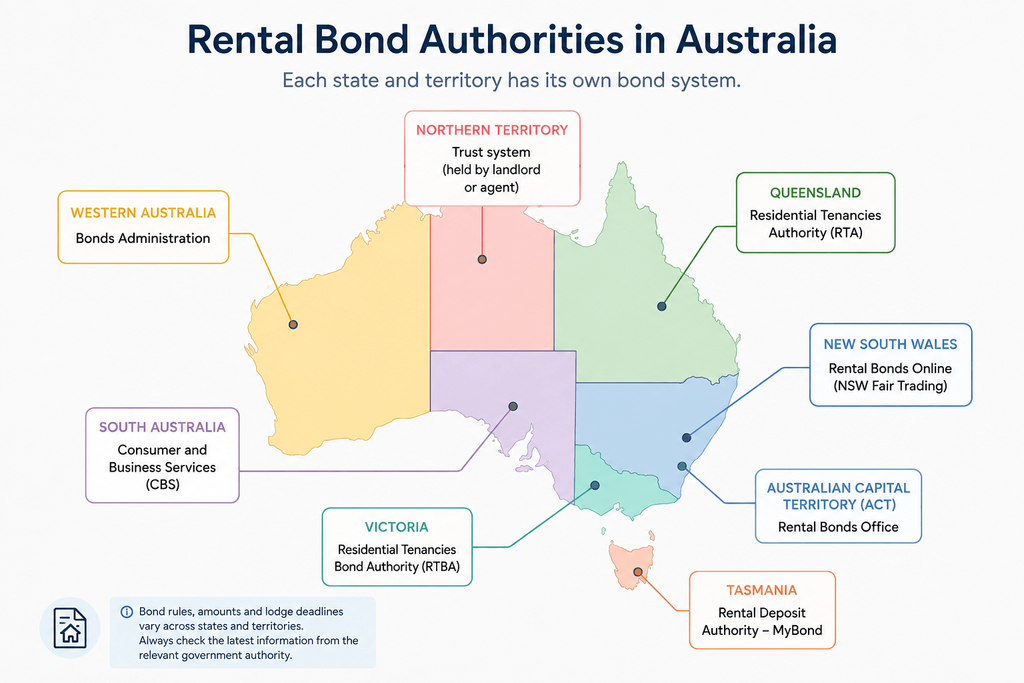
There is no single national rental bond system.
Rental laws are handled by individual Australian states and territories, so the organisation that holds or administers your bond depends on where you live.
For example, Victoria uses the Residential Tenancies Bond Authority (RTBA), NSW uses Rental Bonds Online, and Queensland uses the Residential Tenancies Authority (RTA). In the Northern Territory, the system is different again: landlords or agents generally hold security deposits in trust.
That distinction is important.
Searching for rental information about “Australia” can sometimes give you an answer that doesn’t actually apply to your state.
The mistake that nearly cost us $3,000
My experience happened in Victoria.
My friends and I rented two properties through the same real estate agency.
During our first tenancy, we received an email related to the RTBA, but we didn’t understand its importance. We assumed that if we had missed something important, the agent would follow us up.
We didn’t investigate further.
Later, when that tenancy ended, we were told that around $3,000 would be deducted from our bond of roughly $6,200 for cleaning and repairs.
That seemed excessive to us, so we challenged it.
During the dispute, my partner’s parents asked us:
“Was your bond actually lodged with the RTBA?”
That was when I finally understood what the RTBA was — and realised that I had never properly checked what had happened to our bond.
In Victoria, rental bonds are generally lodged with and held by the RTBA rather than simply being kept as ordinary money by the landlord or agent.
We challenged the situation and were prepared to pursue the matter formally.
Before it got to that point, the other side agreed to settle.
We eventually received the entire bond back.
So instead of losing around $3,000, we recovered the full amount.
It worked out in the end, but the whole experience could have been much less stressful if I’d understood the system from the beginning.
Who manages rental bonds around Australia?
Here’s the part I would have loved to see when I first started renting:
| State/Territory | Bond authority or system |
|---|---|
| Victoria | Residential Tenancies Bond Authority (RTBA) |
| New South Wales | NSW Fair Trading – Rental Bonds Online |
| Queensland | Residential Tenancies Authority (RTA) |
| Western Australia | Bonds Administration |
| South Australia | Consumer and Business Services – Residential Bonds Online |
| Tasmania | Rental Deposit Authority – MyBond |
| ACT | Rental Bonds Office |
| Northern Territory | Bond generally held in trust by the landlord or agent |
For example, NSW’s Rental Bonds Online lets tenants lodge, view and claim their bond, while Queensland requires bonds to be lodged with the RTA. Western Australia uses Bonds Administration, and Tasmania manages rental bonds through MyBond.
The exact rules also vary, including how much bond can be charged and how quickly it must be lodged.
So don’t rely on a random article that simply says, “In Australia, landlords must…”
Check which state or territory the information applies to.
What I would do differently today
If I were renting my first property in Australia again, the first thing I’d do after paying the bond is confirm:
Who is supposed to hold it?
Then I’d keep any official confirmation, receipt or bond number somewhere safe.
If I received an email from an organisation such as the RTBA, RTA or Rental Bonds Online, I certainly wouldn’t ignore it this time.
You don’t need to understand every section of tenancy legislation.
You just need to know where your money is supposed to go and have evidence that it got there.
Take your condition report seriously
There was one thing I did get partly right.
Before moving in, I had read online that I should take photos of the property.
So I did.
But I wasn’t particularly thorough.
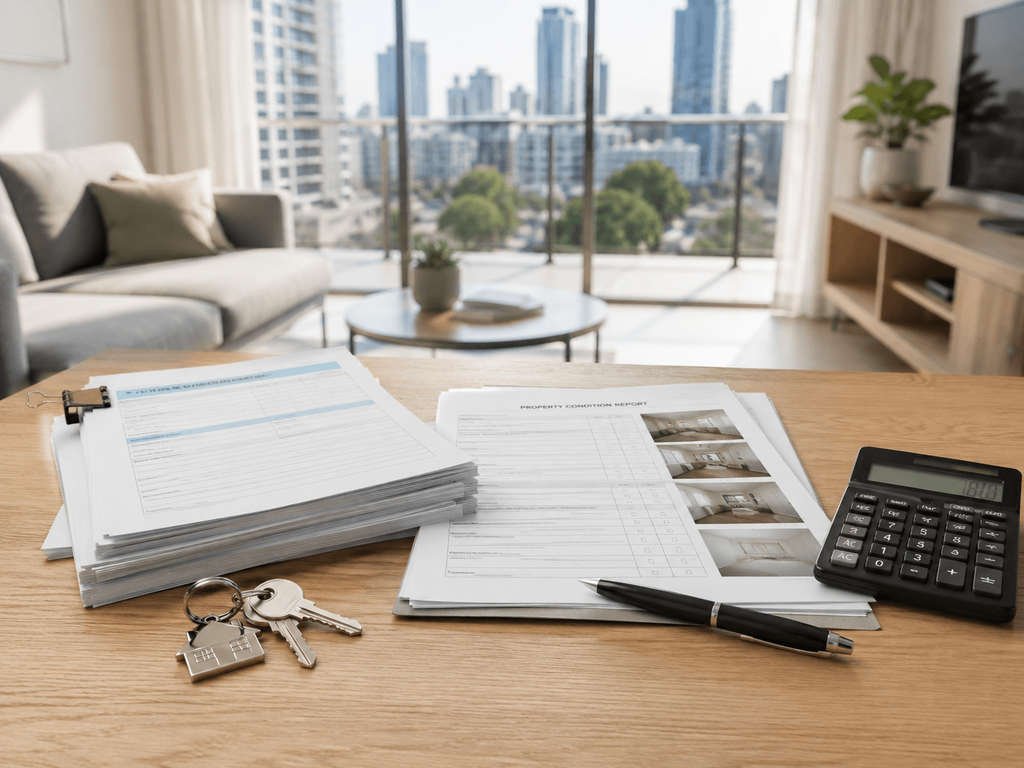
I took general photos rather than carefully documenting every existing scratch, stain, chip or damaged fitting.
After going through a bond dispute, I’d be much more careful now.
Your move-in condition report and photos can become extremely important if there is a disagreement later about who caused damage.
I’d photograph each room, then take close-ups of anything already damaged or dirty.
Think about things like carpet stains, wall marks, scratched floors, chipped benchtops, blinds, appliances and bathroom fittings.
And then actually keep the photos.
A folder containing your lease, bond confirmation, condition report and move-in photos may seem unnecessary when everything is going well.
It won’t seem unnecessary if you’re arguing about $3,000 two years later.

Report problems while you’re living there
I’d also recommend reporting problems to your property manager or landlord when they happen.
If you notice damage or something breaks, send an email and keep a record.
Something as simple as:
“Hi, just letting you know we’ve noticed this damage today. I’ve attached a photo for reference.”
can be useful later.
You don’t need to document every tiny scratch in the house.
The point is simply to avoid reaching the end of your tenancy and having to rely entirely on your memory about something that happened a year earlier.
Don’t automatically accept a bond deduction
A landlord may have legitimate reasons to claim some of the bond.
A bond isn’t a guarantee that you’ll receive every dollar back regardless of what happened during the tenancy.
But the opposite is also true:
A proposed deduction isn’t automatically final just because your landlord or agent says so.
Each state and territory has its own process for bond refunds and disputes.
If you’re presented with a deduction you genuinely don’t agree with, check the official process where you live before simply accepting it.
That was ultimately what made the difference for us.
What I wish someone had told me
If you’re renting in Australia for the first time, remember four things:
✓Know where your bond should be held.
Check the system for your state or territory rather than assuming it works the same everywhere in Australia.
✓Make sure it was actually processed.
Keep the confirmation, receipt or bond number.
✓Document the property properly.
Take photos when you move in — preferably more carefully than I did.
✓Keep important communication in writing.
Report problems when they happen and save the records.
None of these things is particularly difficult.
The problem is that when you’re new to Australia, you often don’t know what you don’t know.
That was certainly the case for me.
I nearly lost around $3,000 before learning how important the rental bond system actually was.
Thankfully, we challenged the deductions and eventually received our full bond back.
Hopefully, you can learn the same lesson without having to go through the stressful part first.
My experience took place in Melbourne, Victoria. Rental laws and bond procedures differ between Australian states and territories, so always check the latest information from the relevant government authority where you live.
This article contains general information based on personal experience and official government resources. It is not legal advice.